Landowners, farmers, and community members are alerted to learn to identify one of North America’s most poisonous plants and to act before this year’s seed crop matures.
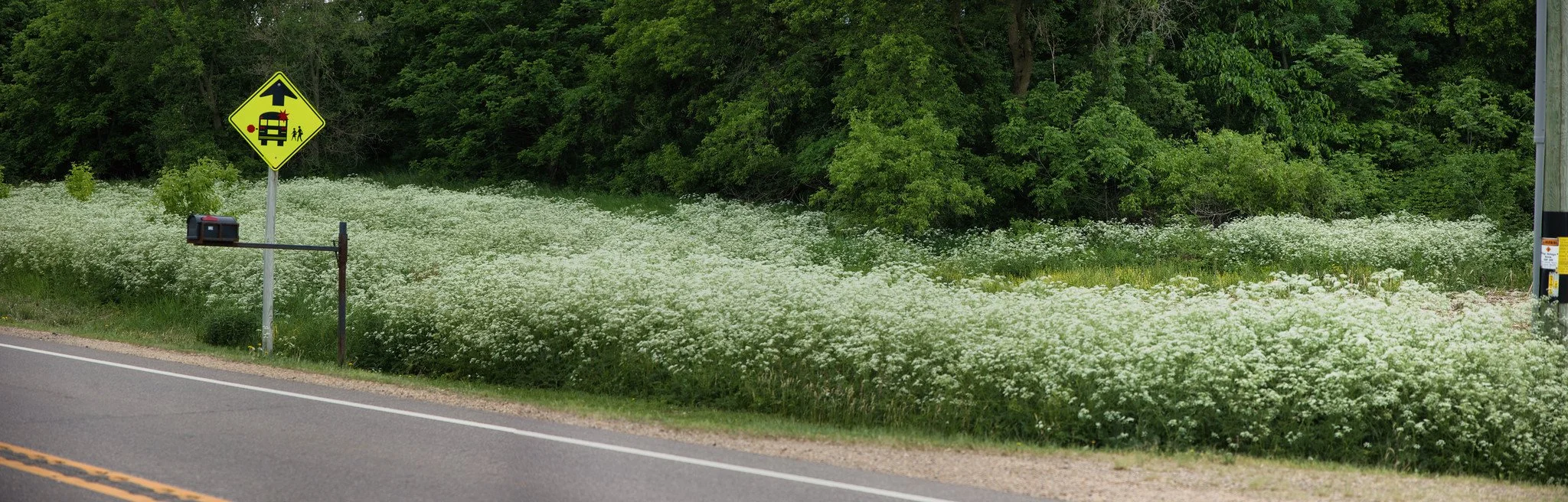
A dense, head-high colony of poison hemlock lines a rural road shoulder beside a school-bus crossing sign. A stark reminder that this lethal plant is establishing exactly where exposure by children, pets, and livestock can cause harm. Photo: Craig Ellefson.
BRODHEAD, WI - A highly poisonous invasive plant capable of killing humans, livestock, and wildlife is spreading rapidly across roadsides, farm-field margins, drainageways, and even wetlands throughout Wisconsin and Minnesota, Applied Ecological Institute (AEI) warned today. Poison hemlock (Conium maculatum), every part of which is toxic, now forms dense colonies four to twelve feet tall along travel corridors, including a large stands recently documented in Barron County, Wisconsin, and extensive infestations along both the Wisconsin and Minnesota state lines bordering fields near the St. Croix River.
Senior ecologist Steven Apfelbaum, founder of AEI, says the pattern of spread is unmistakable and increasingly urgent. “These colonies march outward from mowed road shoulders, ditches, and field edges, then push into drainageways and low wetland ground,” he said. “Wherever the soil is disturbed, and the sun reaches the ground, poison hemlock moves in, and native plants disappear beneath it. We are watching a genuinely dangerous plant convert ordinary roadsides into hazards.”
Know it, and don’t confuse it with Queen Anne’s lace:
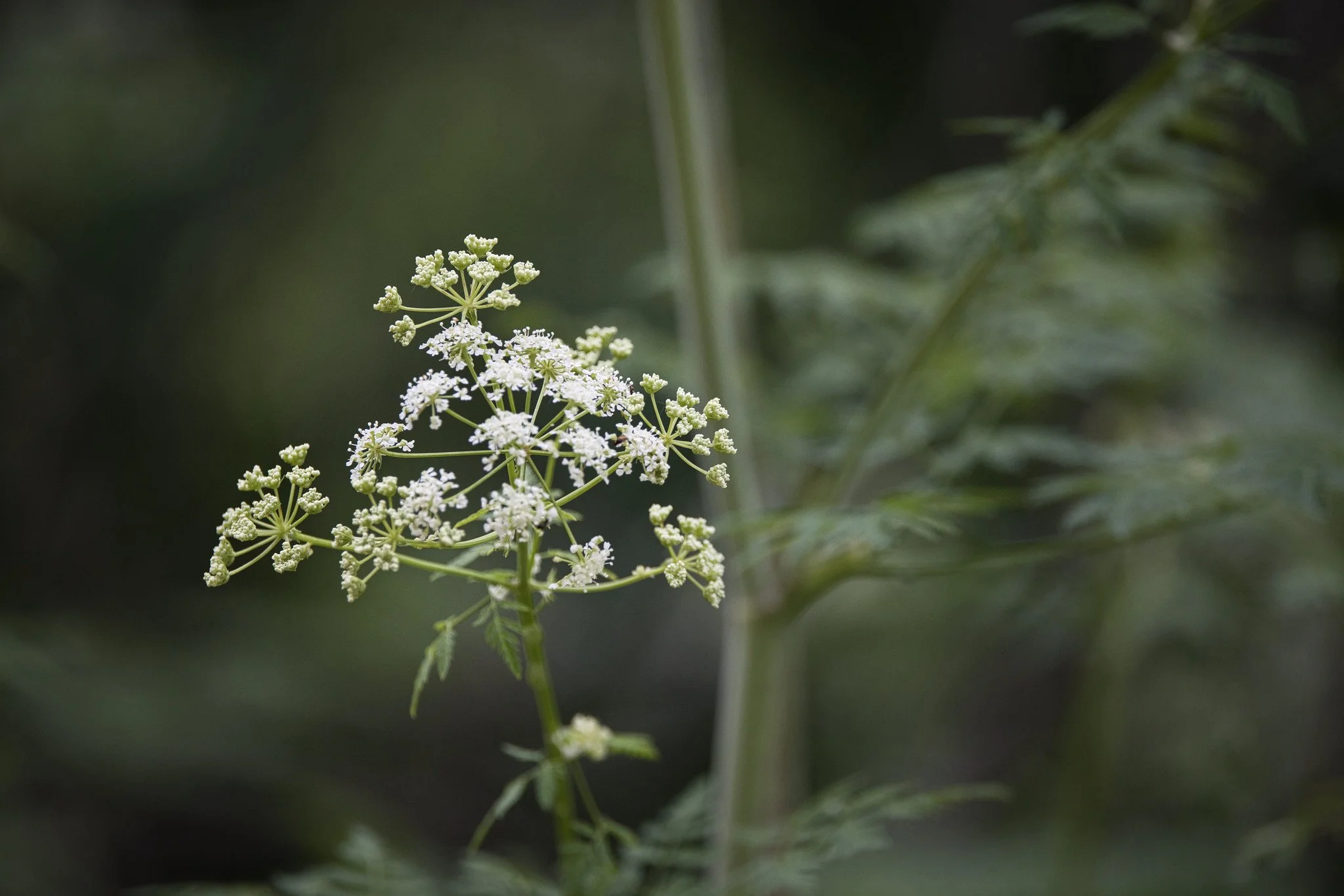
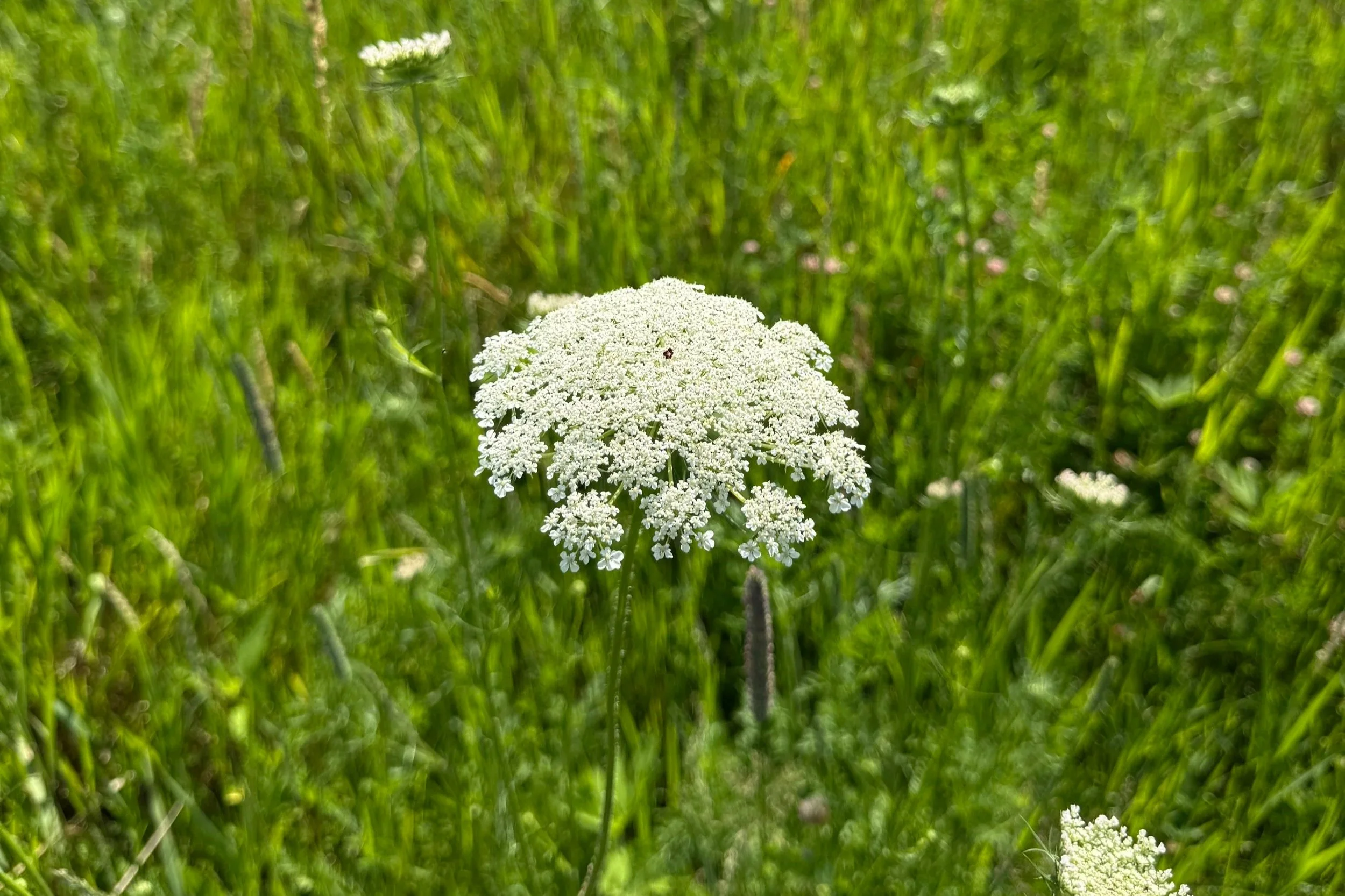
Photo Description: Poison hemlock’s (left) lacy, fern-like foliage and broad clusters of tiny white flowers are easily mistaken for harmless Queen Anne’s lace (right). The reliable difference: hemlock’s smooth, hollow, purple-blotched stems and its towering height. Photo: Craig Ellefson
Poison hemlock is frequently mistaken for Queen Anne’s lace (wild carrot), but the two are easy to tell apart once you know the signs. Queen Anne’s lace is short, typically one to three feet tall, with hairy stems and a single flat flower cluster. Poison hemlock towers above it at four to twelve feet, with smooth, hairless, hollow stems marked with distinctive purple spots or blotches. Its leaves are bright green, glossy, and finely divided like parsley or fern, and they give off a rank, musty odor when crushed. Broad, umbrella-shaped clusters of tiny white flowers appear from late spring through midsummer. A single plant can produce more than 30,000 seeds.
One of the most poisonous plants in North America.
All parts of poison hemlock: leaves, stems, flowers, seeds, and the thick white taproot, contain potent piperidine alkaloids, chiefly coniine and gamma-coniceine. Gamma-coniceine, the more toxic of the two, dominates in the plant’s early growth, while seeds and dried material carry the highest concentrations of coniine. These toxins attack the nervous system, causing trembling, excess salivation, dilated pupils, a rapid, weak pulse, muscle paralysis, respiratory failure, and death in both humans and animals. This is the same poison used in ancient times to execute the philosopher Socrates.
Human risk: Poisoning occurs through ingestion or when sap reaches the eyes, nose, or mouth. Foragers occasionally mistake the plant for wild carrot, parsley, or parsnip with tragic results. Equipment operators are also at risk: cutting or string-trimming the plant can spatter toxic sap. Federal and state agencies advise the public never to handle poison hemlock with bare skin and to keep children well away from roadside stands. If exposure or ingestion is suspected, call Poison Control immediately at 1-800-222-1222.
Livestock risk: Cattle, horses, sheep, goats, and other stock are poisoned when hemlock contaminates hay, silage, or overgrazed pastures, hazards that climb in spring and drought when other forage is scarce. The plant retains its toxicity when dried in baled hay, and animals will eat more of it dried than fresh. The alkaloids can taint milk, and eating the plant during pregnancy can cause severe birth defects in calves, foals, and other young. Even small amounts can be lethal to a large animal.
Wildlife and habitat: Where poison hemlock forms dense colonies, native wildflowers, grasses, and the food and cover they provide for pollinators, birds, and other wildlife decline sharply beneath the canopy. The plant offers little benefit in return, converting diverse roadside and streamside communities into toxic monocultures and degrading the ecological corridors that connect Wisconsin’s and Minnesota’s natural areas.
Why it’s spreading and how mowing fits in:
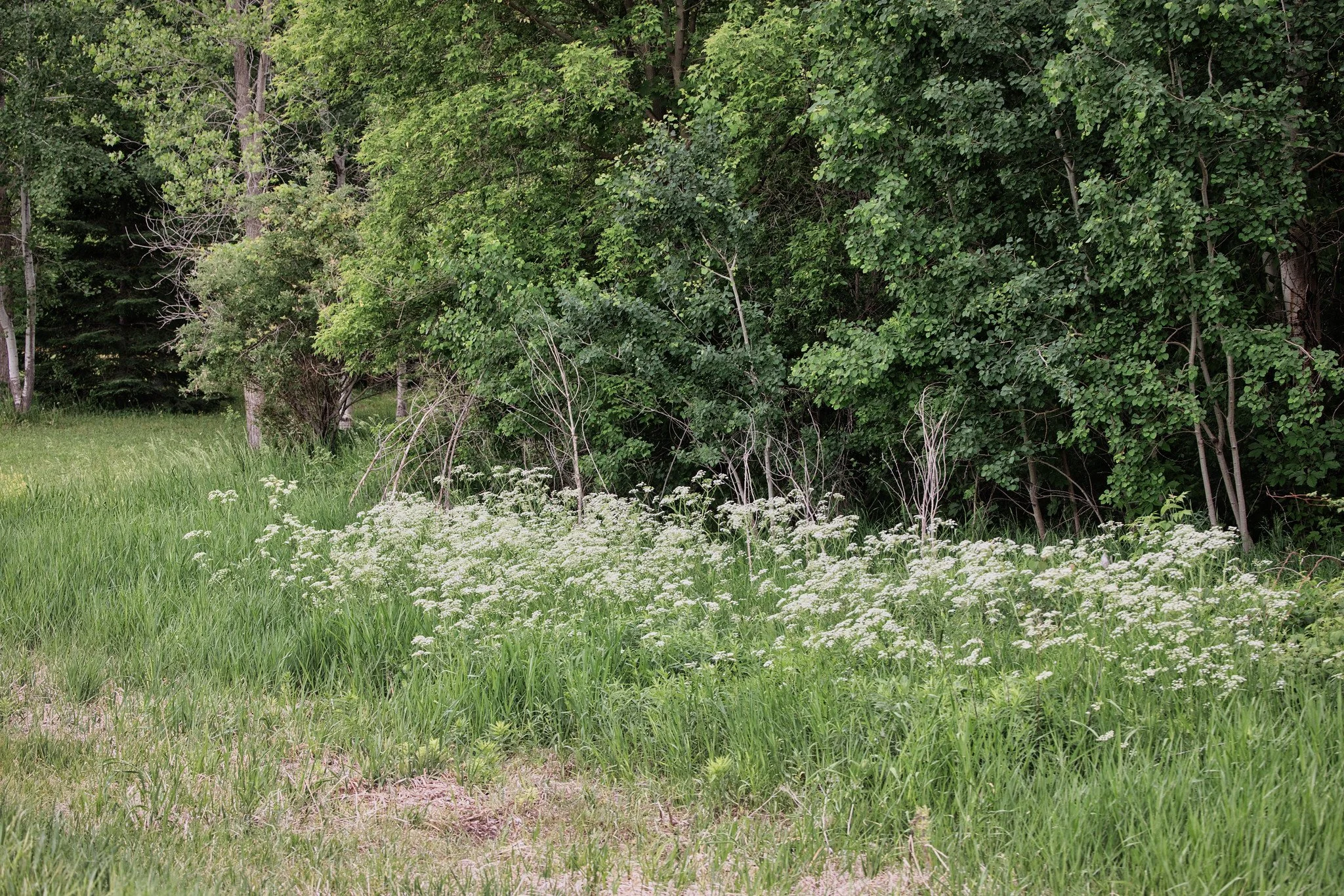
A colony advancing along a grassy field edge into the wetland margin. Poison hemlock thrives on disturbed, sunlit ground and follows roadsides, ditches, and waterways outward into new country. Photo: Craig Ellefson.
Poison hemlock is a biennial — it spends its first year as a low rosette of lacy leaves, then bolts, flowers, and sets seed in its second year before dying. It spreads only by seed, and it travels along the corridors people manage: highways, ditches, fence lines, drainageways, and rivers. Mowing equipment is one of the most effective ways those tens of thousands of seeds move to new ground.
Timing is everything. Mowing before the plants flower and set seed can prevent a colony from reproducing that year. But mowing after seed has formed does the opposite — it shatters and scatters viable seed and carries it down the road on mowers and trimmers, which helps explain why colonies so often expand outward from regularly mowed margins. AEI urges road crews, townships, and landowners to identify hemlock stands early in the season, schedule cutting before seed matures, and clean equipment before moving on.
What landowners and agencies can do now:
Time mechanical control correctly. Mow or cut just before peak flowering to stop seed production. Avoid mowing once seed has set; if you must, bag and dispose of seed heads rather than scatter them.
Treat first-year rosettes. Herbicides work best on small rosettes in fall or early spring, before the plant bolts, when daytime temperatures are reliably above 60°F. Selective products containing 2,4-D, triclopyr, or dicamba are commonly used in pastures and rights-of-way; glyphosate is an option on non-crop ground. Herbicides are largely ineffective once plants are tall and flowering. Always follow the label.
Dig out small patches. Individual plants and the taproot can be dug with a shovel. Wear gloves, long sleeves, eye protection, and closed-toe boots, and never touch your face while working.
Dispose of it safely. Bag plants and seed heads for the landfill. Do not compost, cut and composted material stays toxic and seed can survive. Do not burn, which can release irritating smoke.
Clean equipment and repeat. Remove plant material and seed from mowers, trimmers, and tires. Because of a long-lived seed bank, control takes several consecutive seasons.
Report infestations. Poison hemlock is a regulated invasive in both states (a Prohibited/Restricted species under Wisconsin’s NR 40 and a Prohibited Noxious Weed (Control list) in Minnesota) meaning landowners are expected to prevent its spread. Report sightings to your county Land Conservation Department, the Wisconsin DNR, or the Minnesota Department of Agriculture’s “Report a Pest” program, and log locations on EDDMapS.
“The encouraging news is that this is a plant we can get ahead of,” Apfelbaum said. “It spreads by seed, on a predictable two-year clock, and along corridors we already manage. If neighbors, farmers, and county crews learn to recognize it and coordinate their timing – cutting before seed, treating the rosettes, and not carrying seed down the road, we can stop these colonies before they take over our roadsides and waterways. The first and most important step is simply learning to see it.”