
Why Watersheds Matter
No matter where you are, you are in a watershed. The water flowing over the land and through the soil beneath our feet creates a network connecting the uplands, springs, wetlands, streams, and rivers of the Lower Sugar River Watershed. A well-functioning watershed provides clean drinking water, irrigation, and healthy soil for crop production, protection from flooding, and adequate wildlife habitat in addition to providing enjoyment and outdoor recreation opportunities.
We ALL have a stake in clean water!
Soil Assets
-
Biodiversity
-
Habitat Protection
-
Water Quality
-
Recreation
-
Local Economy
-
Wastewater Management
-
Flood Control
-
Soil Assets - Biodiversity - Habitat Protection - Water Quality - Recreation - Local Economy - Wastewater Management - Flood Control -
Soil Assets
The foundation of a healthy watershed!
Agricultural producers know that rich, balanced, and healthy soil is a necessity for growing the highest quality and most productive plants for cash crops and as food for livestock. But most of us don't really understand soil composition, how valuable it really is to our own health and well-being, and the growing concerns over how to keep our precious soil assets from literally washing away beneath our feet.
The following content is based on the introduction to "The Management of Wisconsin Soils," (UW Extension, 5th edition, 2005). It is a powerful summary of soil's critical role in the cycle of life here on earth.
While everyone looks at soil differently, agriculturalists—from scientists to producers—view soil in terms of its ability to support the growth of plants. In this capacity, soil ultimately supports nearly all plant and animal life on our planet.
To the uneducated eye, the soil is nothing more than an inert hodge-podge of different-sized and colored particles of dirt. Nothing could be further than the truth! "Living organisms by the billions, decaying and residual organic matter, a wide variety of minerals, and air and water interact to form a dynamic and exceedingly complex biological, physical and chemical system. A teaspoon of soil may contain as many microorganisms as there are people on earth... and the same teaspoon of soil contains more chemical atoms than there are drops of water in Lake Superior and Lake Michigan combined!"
-
While the science, biology, and physical processes that occur in the soil can be difficult to understand, those of us who are making decisions about land use must understand what is happening "in the ground" in order to make wise choices that will ensure the health of the soil for our shared future. It is not enough to know WHAT to do, we must also comprehend WHY we are doing it! In order to efficiently and economically grow crops and use the land, agricultural producers must know and engage in good soil management practices.
As our land use intensifies and our population soars, agriculturalists are challenged as never before to find ways to increase production and manage waste and nutrients without polluting and losing our precious land and water resources.
-
Maintaining healthy waterways cannot be done without good soil management! Runoff water and soil loss from erosion account for a substantial portion of the nitrogen and phosphorus entering streams, rivers, and lakes from rural areas. Establishing and maintaining effective nutrient management programs protects groundwater supplies, supports productive cropping systems, and helps reduce leaching of nutrients.
Life on earth is dependent on clean water and healthy soil. Adopting a true conservation ethic allows us to support agricultural sustainability and environmental protection and become true "stewards of the soil."
Our website's Resource page is being continually populated with content.
Biodiversity
The Lower Sugar River Watershed is well known for its wealth of biodiversity. But what is biodiversity?
Biodiversity can mean one of several things depending on scale and context. Taking the largest view, biodiversity refers to the variations of all forms of life on Earth, from the genetic level up to the species and community levels. However, biodiversity can be measured on a smaller scale too, such as the level of biodiversity found in a natural area or in a watershed. Species richness, or the number of plant and animal species found in an area, is often a measure of that area’s biodiversity.
-
Maintaining a high degree of biodiversity is important because of interactions in nature that require many species to depend on other species in one way or another. In other words, biodiversity is important to maintaining the web of life. If one species goes extinct, it could have a dramatic effect on other species that persist. Interactions between and among plants, animals, and even soil biota can be complex and are often not fully understood, so conserving the entire biodiversity of a region is an important endeavor.
-
Humans depend on the diversity of life. A healthy biodiverse ecosystem benefits people in many ways. From enjoying the beauty of a rare wildflower or endangered landscape, to the protection of soil and water that support the production of our food to the continued health of rare ecosystems, the level of biodiversity of a watershed has wide-ranging implications for the quality of life that we enjoy.
Many plants and animals share their lives in the Lower Sugar River Watershed with us. It’s up to us to ensure that they have the habitat they need to survive and thrive! Fortunately, there are a lot of things we can do to encourage a healthy ecosystem.
Habitat Protection
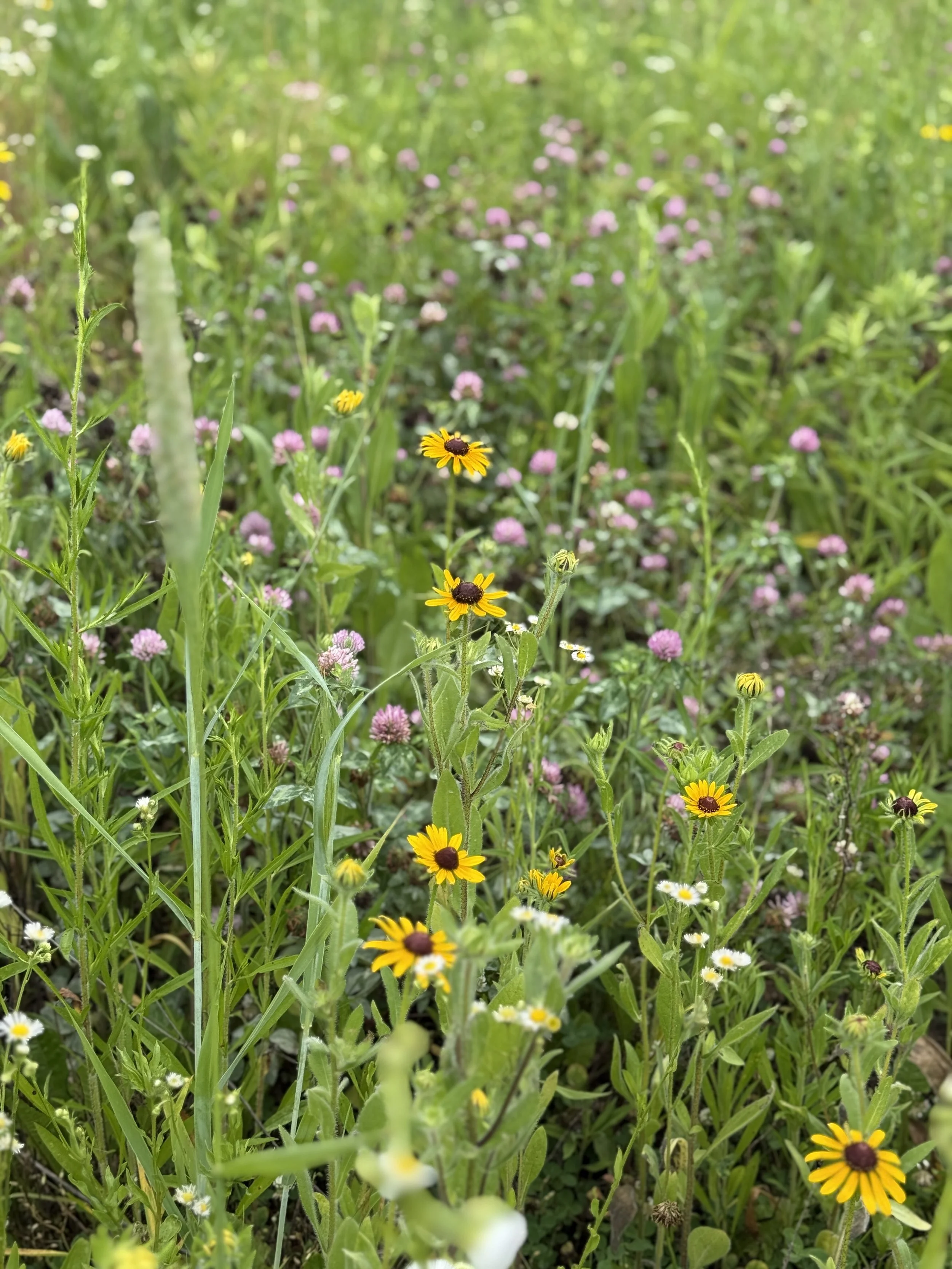
Farmers can create natural buffers along stream banks to encourage the re-establishment of native plants and wildlife. This helps prevent erosion to stream banks, reduces soil loss and added sediment load downstream, and aids in the improvement of water quality.
Create Stream Buffers
-
Homeowners can encourage native birds by planting native plants and creating a bird-friendly habitat with natural cover and food sources. Native plants require less attention and water than exotic species, as they have evolved to live in our part of the country with cold, windy winters and hot, dry summers. They also foster native insects, which in turn attract the birds that feed on these insects. Native butterflies will sip nectar on your native flowers thereby pollinating them. Birds feed on the resulting fruits and seeds. Don’t cut down your wildflowers in the fall. Wait until growth starts again in the spring to cut back the old growth to give our wildlife refuge from winter weather.
Did you know that birding is one of the fastest-growing pastimes in the nation? Creating healthy ecosystems where native bird species can thrive will also attract avid bird watchers. These folks will likely look for places to eat, stay overnight, and shop, thereby infusing outside money into the economy of the watershed.
Water Quality
Every living thing needs clean water to survive.
Everyone needs clean water, and by working together we can ensure that it is a resource that is available for future generations. Our actions every day make an impact, good or bad, on the water quality in the watershed. Remember—everyone lives downstream of someone else!
-
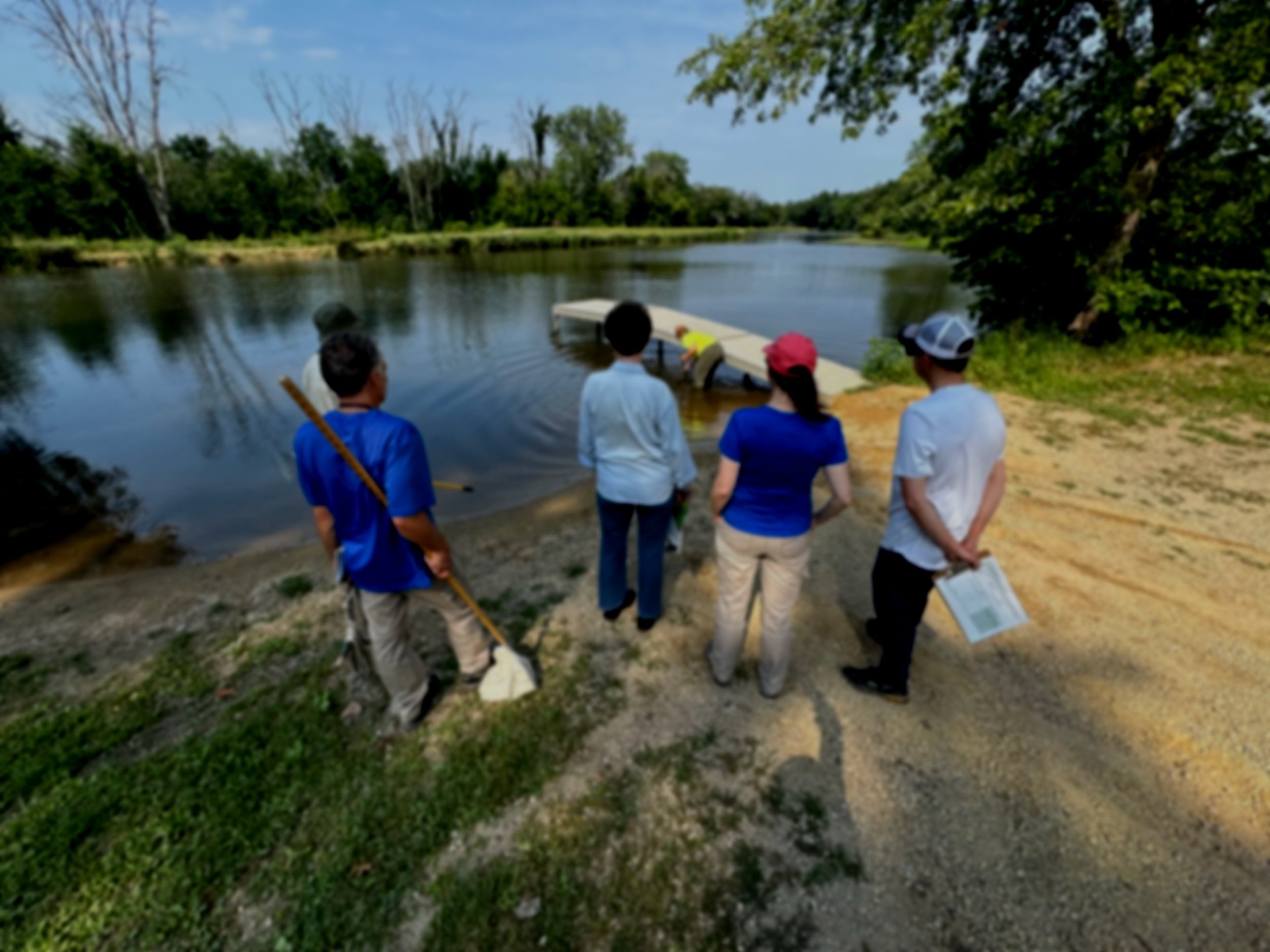
Working to keep clean water throughout the watershed is important to all of us. Water quality is tested periodically by the Lower Sugar River Watershed Association Water Action Volunteers, as well as by other organizations like the Wisconsin DNR.
Chemical tests can look for issues with pollutants that may be invisible to the naked eye, but affect water quality and life in the watershed.
Biological tests are done by sampling some of the living things in the water to see if there is a healthy biotic mix of species.
Visual tests are done to assess sediment load in creeks and places where sediments, like soil particles, can clog up respiration of animals and prevent photosynthesis in plants.
Check out the gallery below to see our team and community members participating in Water Action Volunteer (WAV) Training to perform essential water quality testing throughout our watershed.
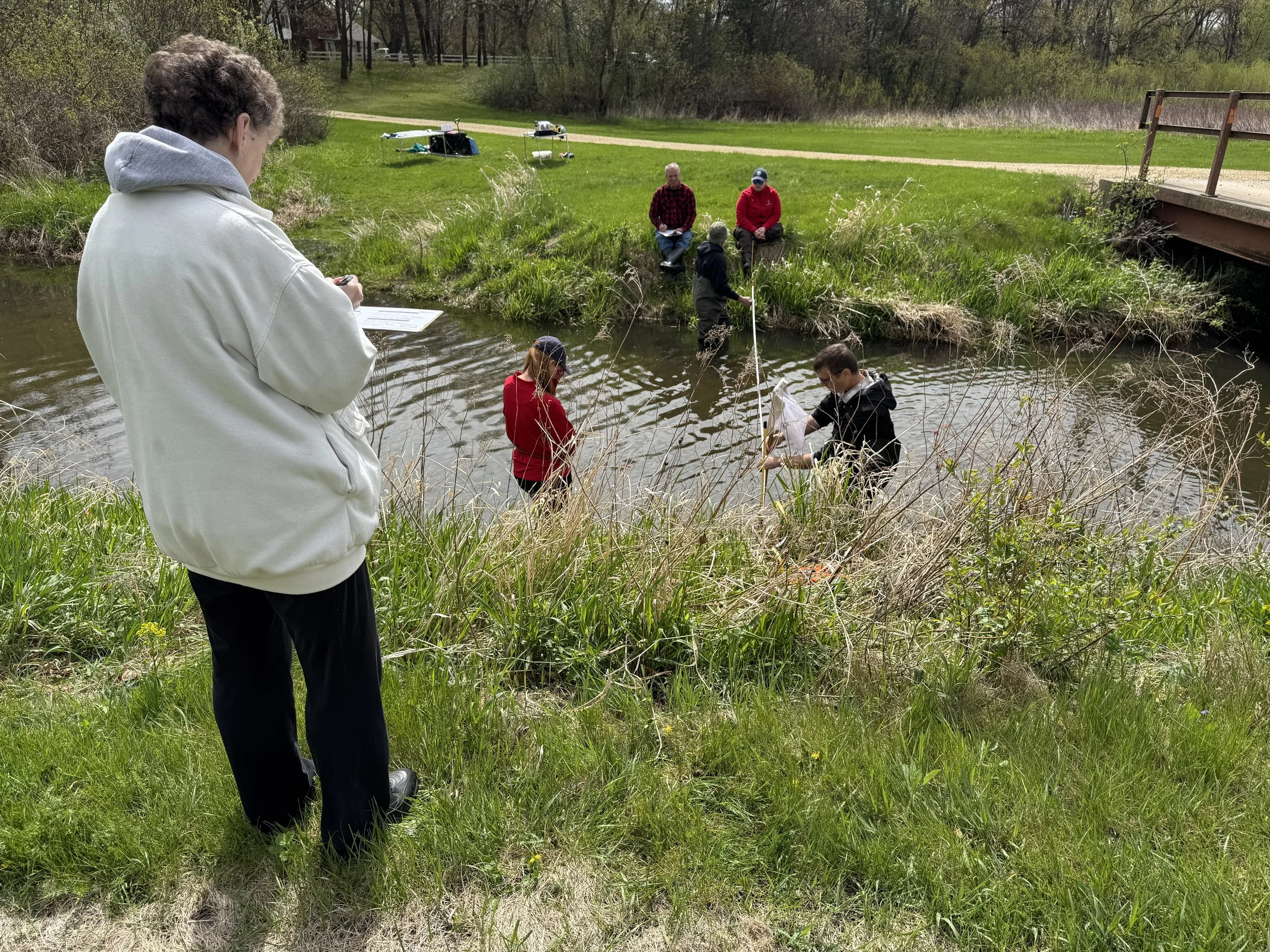
Instruction on measuring and calculating stream flow; shown is Craig Ellefson measuring stream depth intervals at a stream cross section to calculate cross sectional area in the equation.
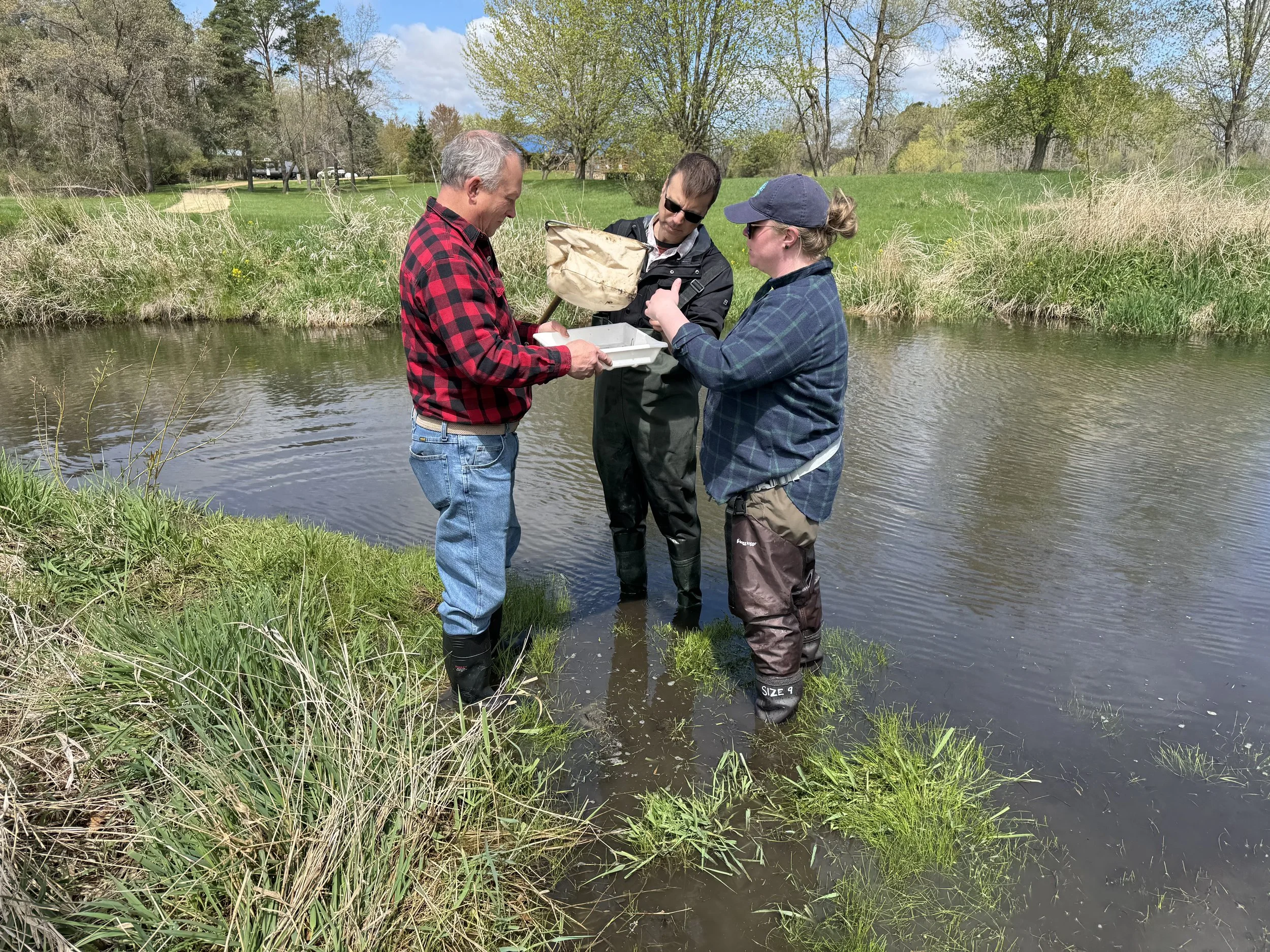
Instruction on assessing Biotic Index and presence of Aquatic Invasive Species (AIS); shown is use of a D-frame kick net to capture aquatic macroinvertebrates from a variety of stream channel environments and transfer of specimens to a sample tray (organisms are returned live to the stream).
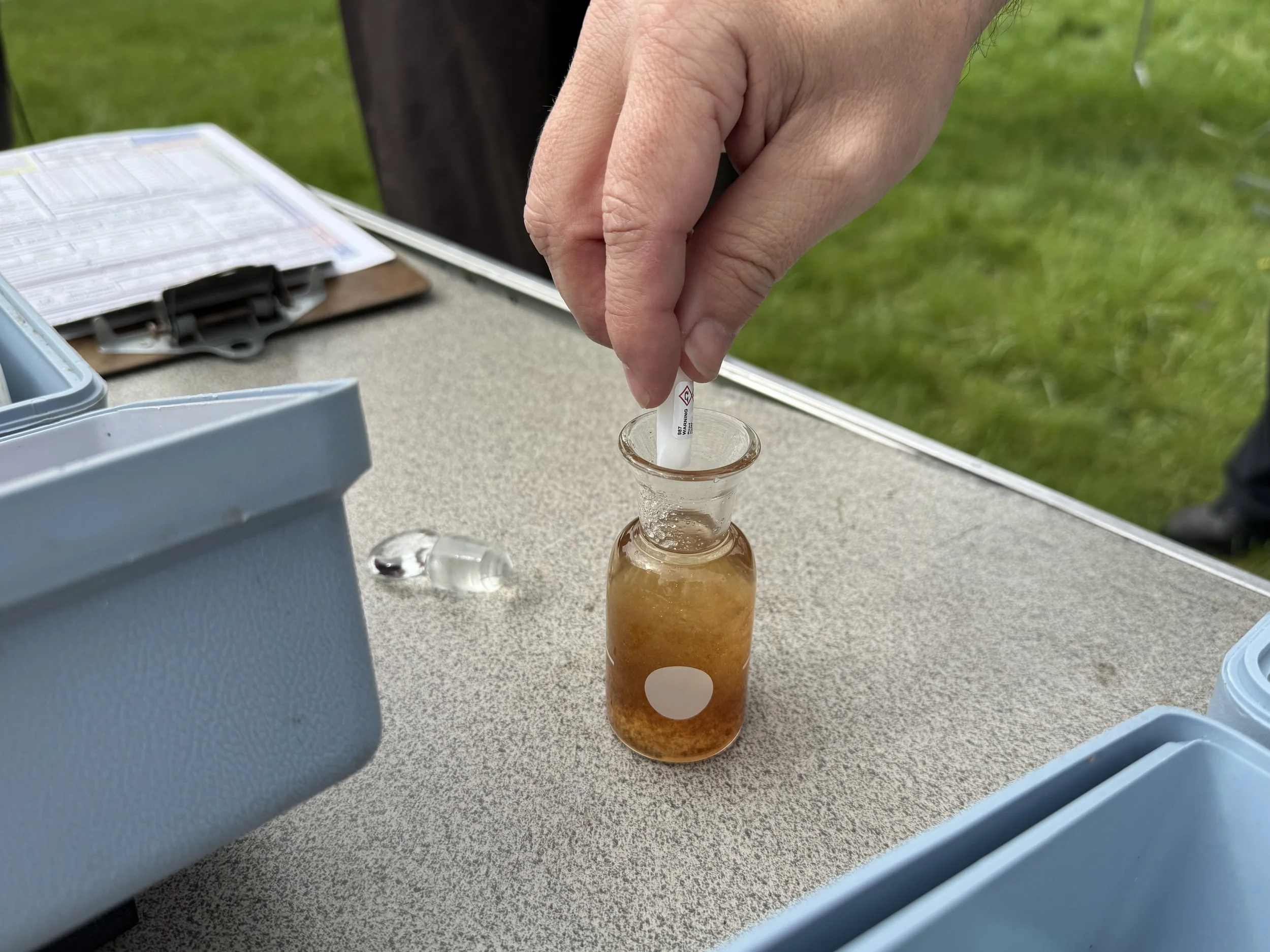
Instruction on use of the Hach dissolved oxygen kit; shown is the addition of reagent to dissolve the brownish orange flocculant precipitate created in Step 2, thus completing the fixing of oxygen in the collected stream sample.
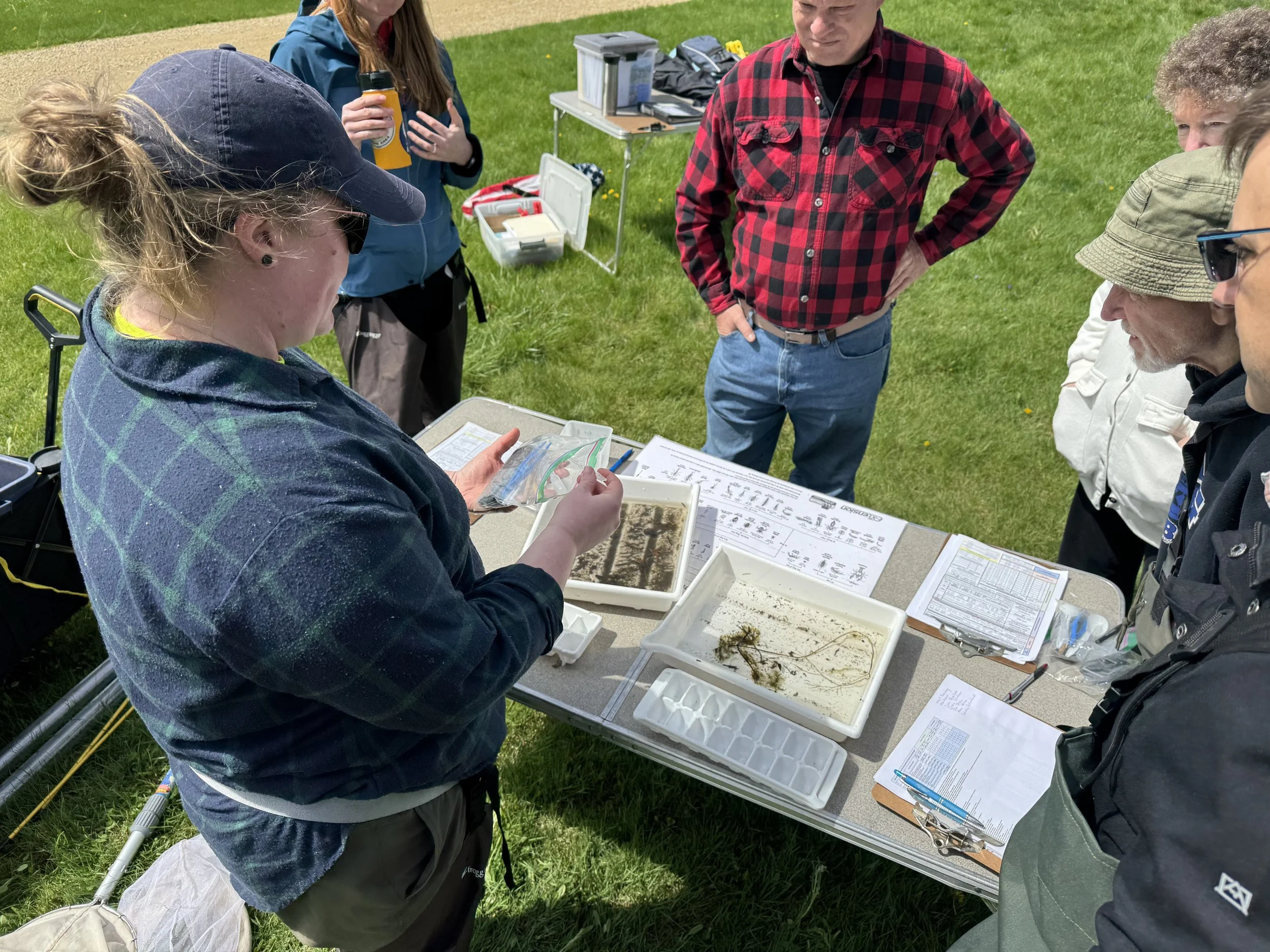
Instruction on assessing Biotic Index and presence of Aquatic Invasive Species (AIS); shown instructors explaining the process of identifying and classifying and scoring organisms using visual keys of species representative of 'good', 'fair', and 'poor' quality habitats to determine the stream's water quality score.
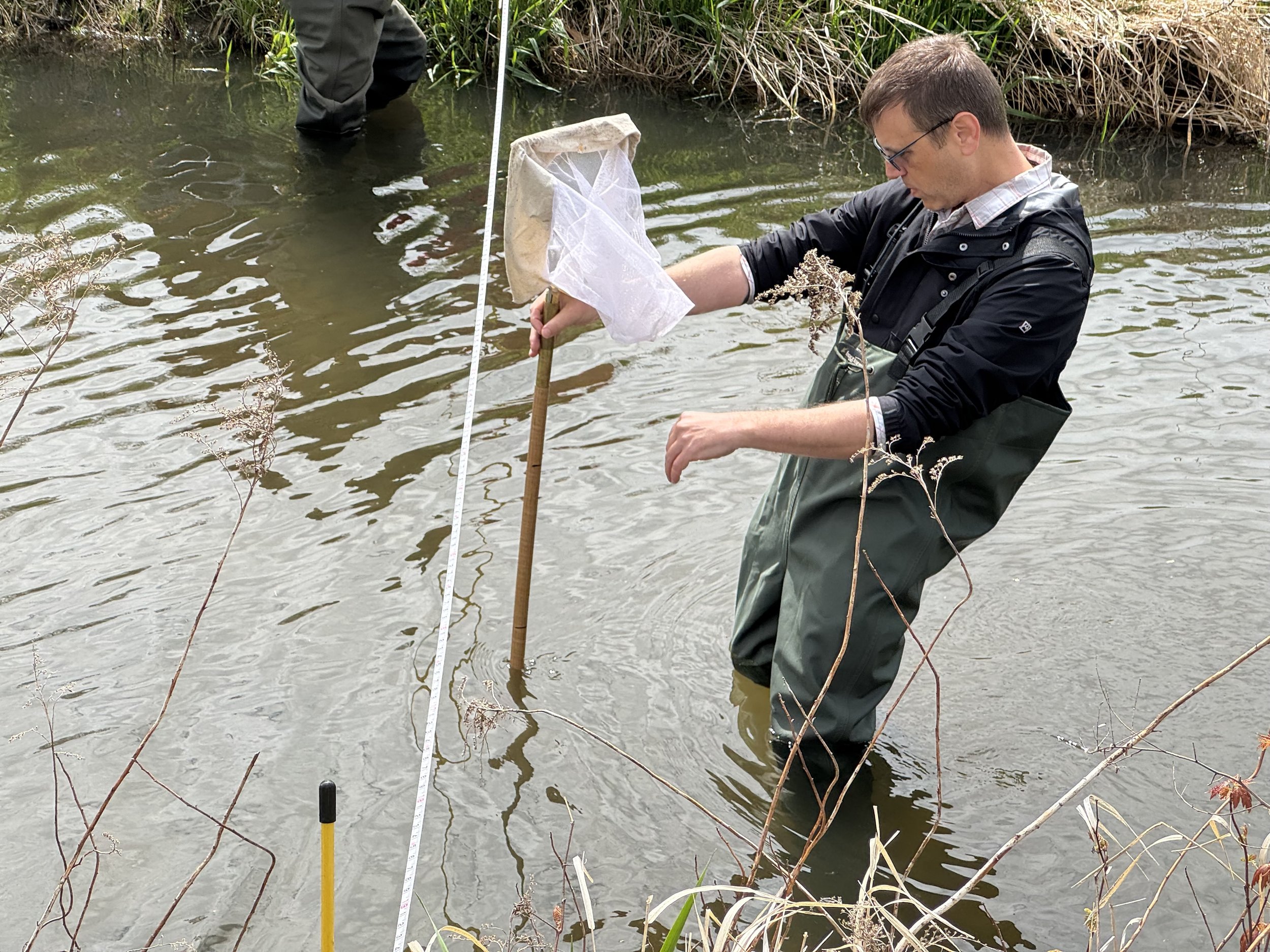
Instruction on measuring and calculating stream flow; shown is Craig Ellefson measuring stream depth intervals at a stream cross section to calculate cross sectional area in the equation.
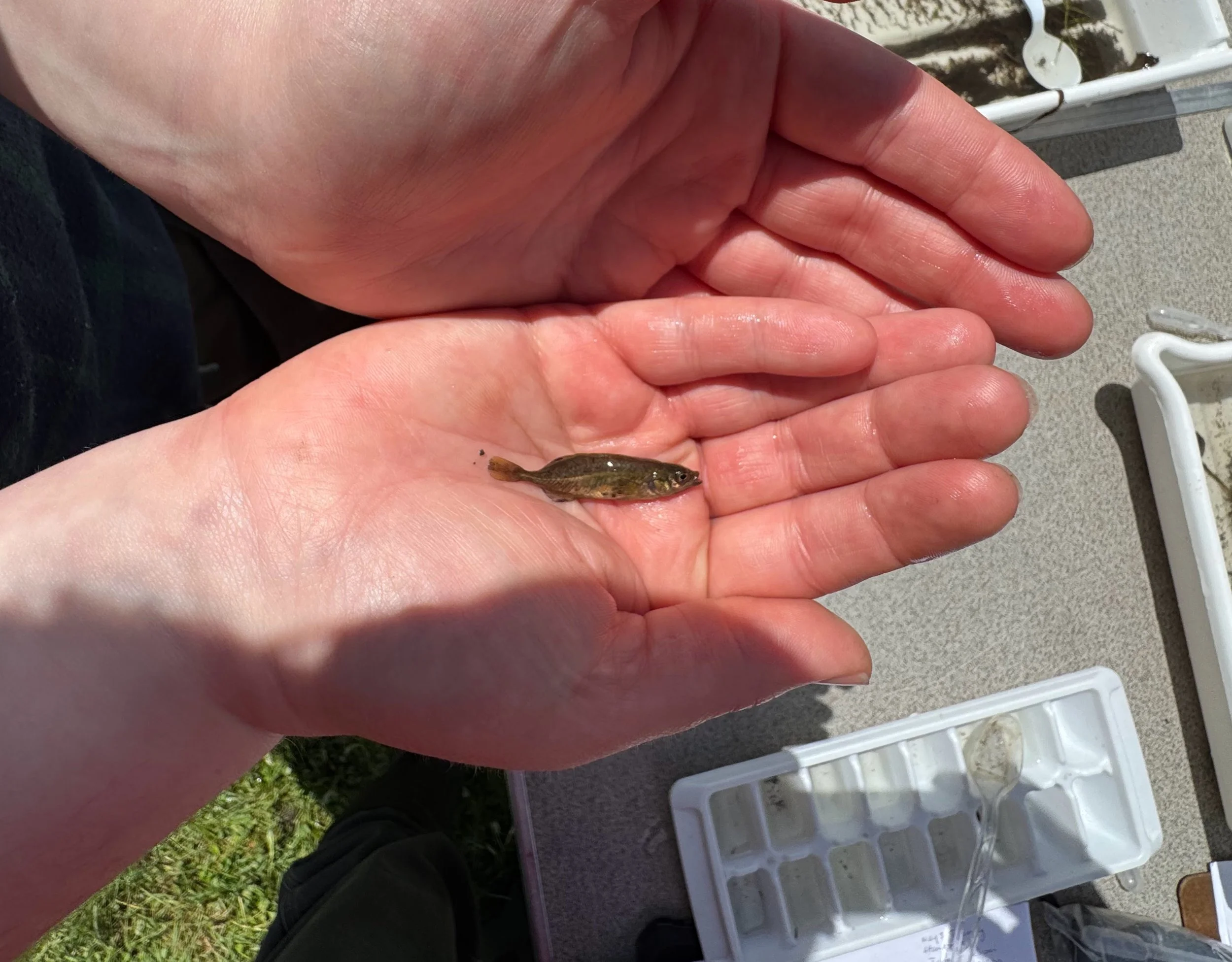
Brook stickleback (Culaea inconstans) captured by Craig Ellefson during aquatic macroinvertebrate demo by Emily Heald, Rivers Educator.
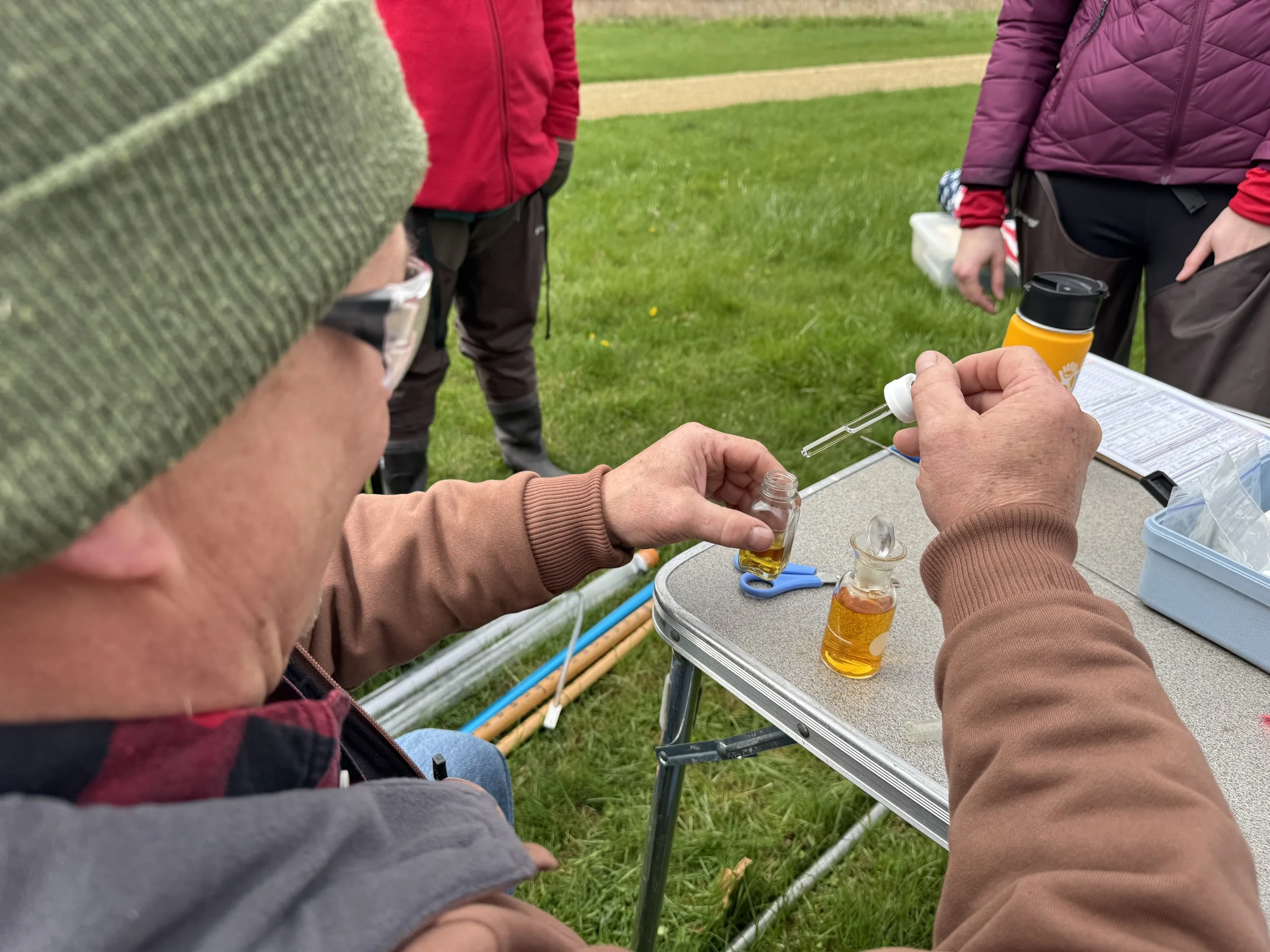
Instruction on use of the Hach dissolved oxygen kit; shown is the final titration step--counting the number of drops of Sodium Thiosulfate to achieve clarity and thus determine the number of oxygen molecules per unit measure of the fixed collected stream sample.
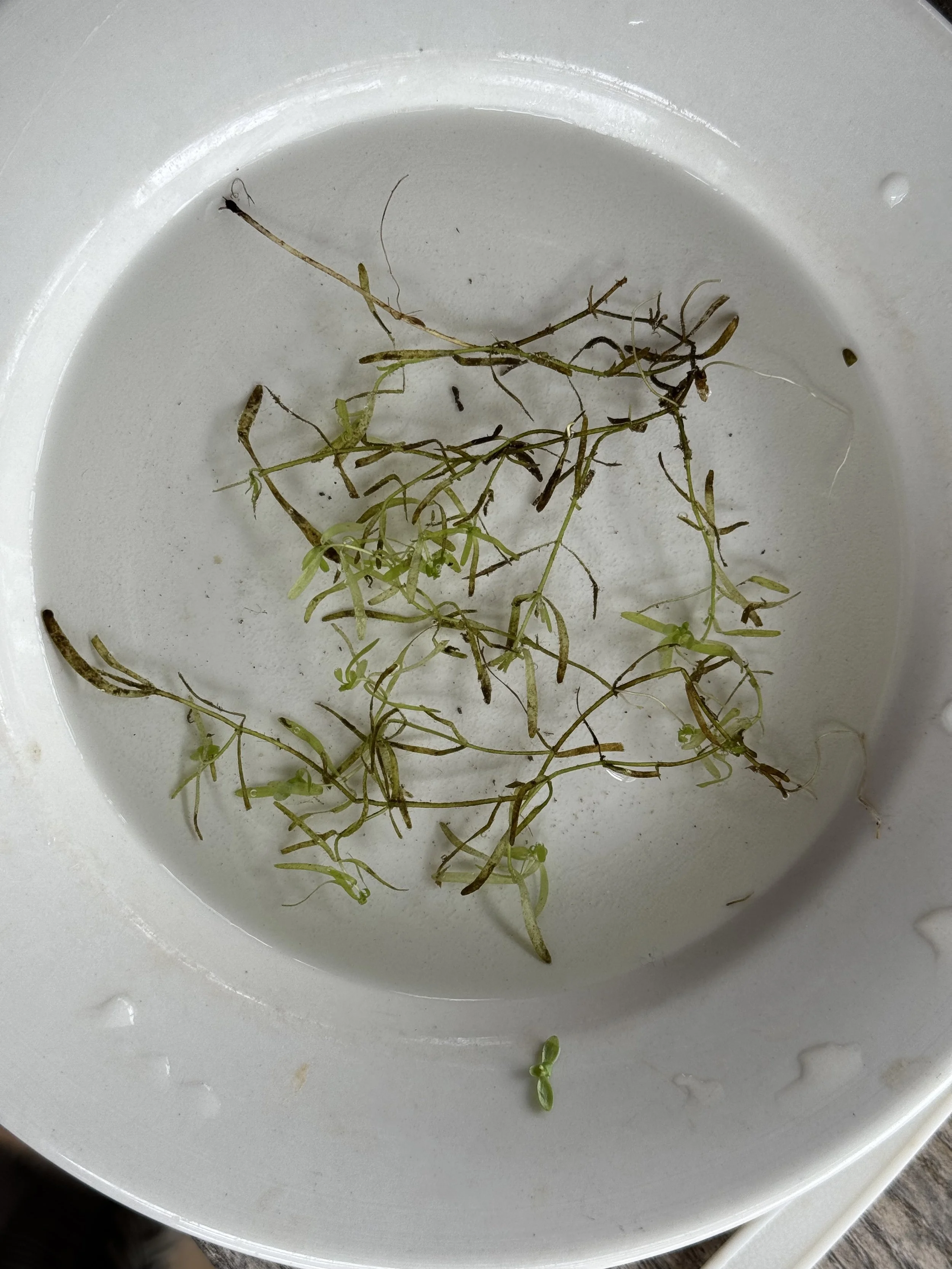
Common water starwort (Callitriche palustris) collected for ID by Susan Lehnhardt during aquatic macroinvertebrate demo by Emily Heald, Rivers Educator
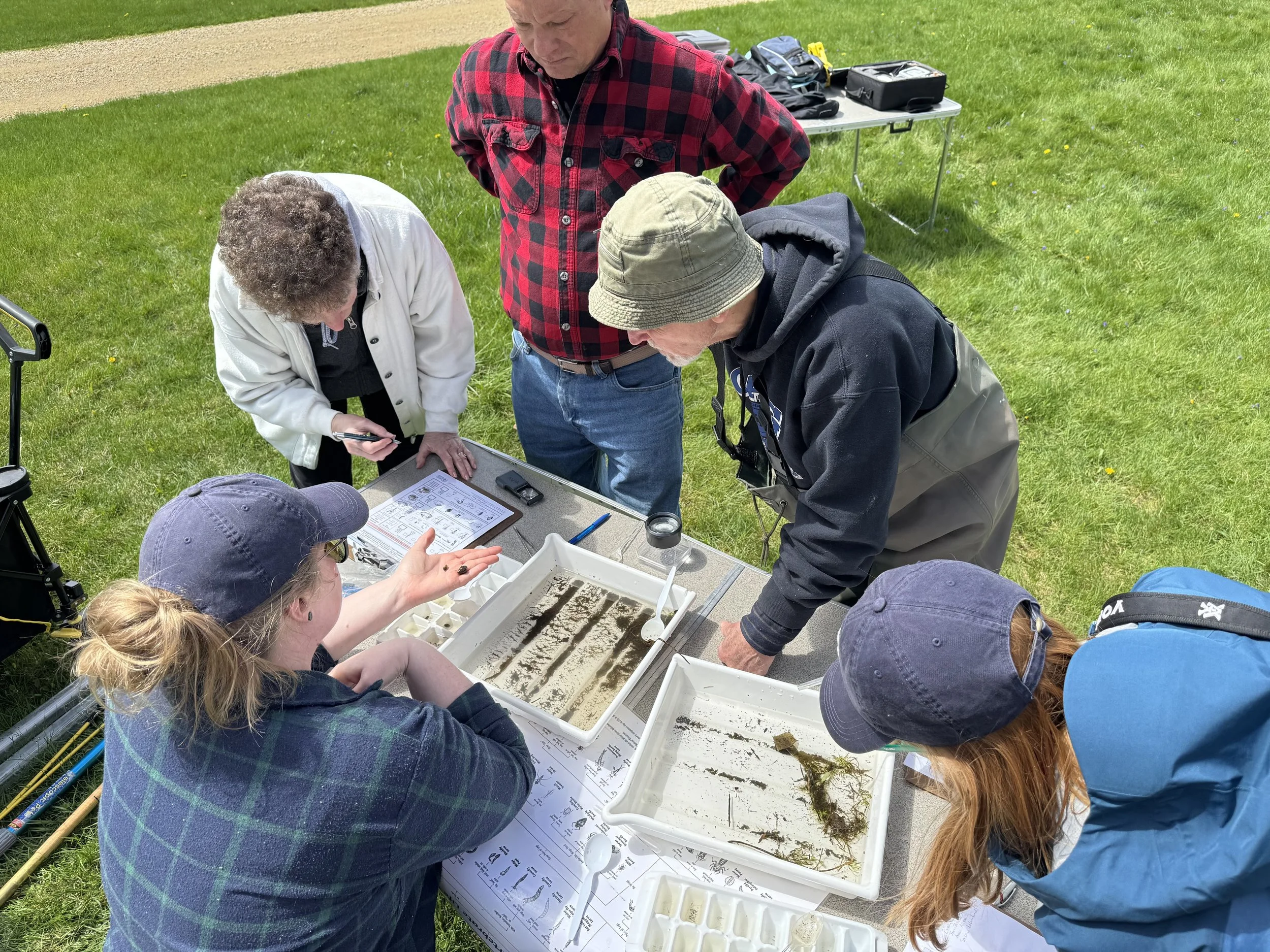
Instruction on assessing Biotic Index and presence of Aquatic Invasive Species (AIS); shown instructors comparing key characteristics of AIS species that distinguish them from similar native species.
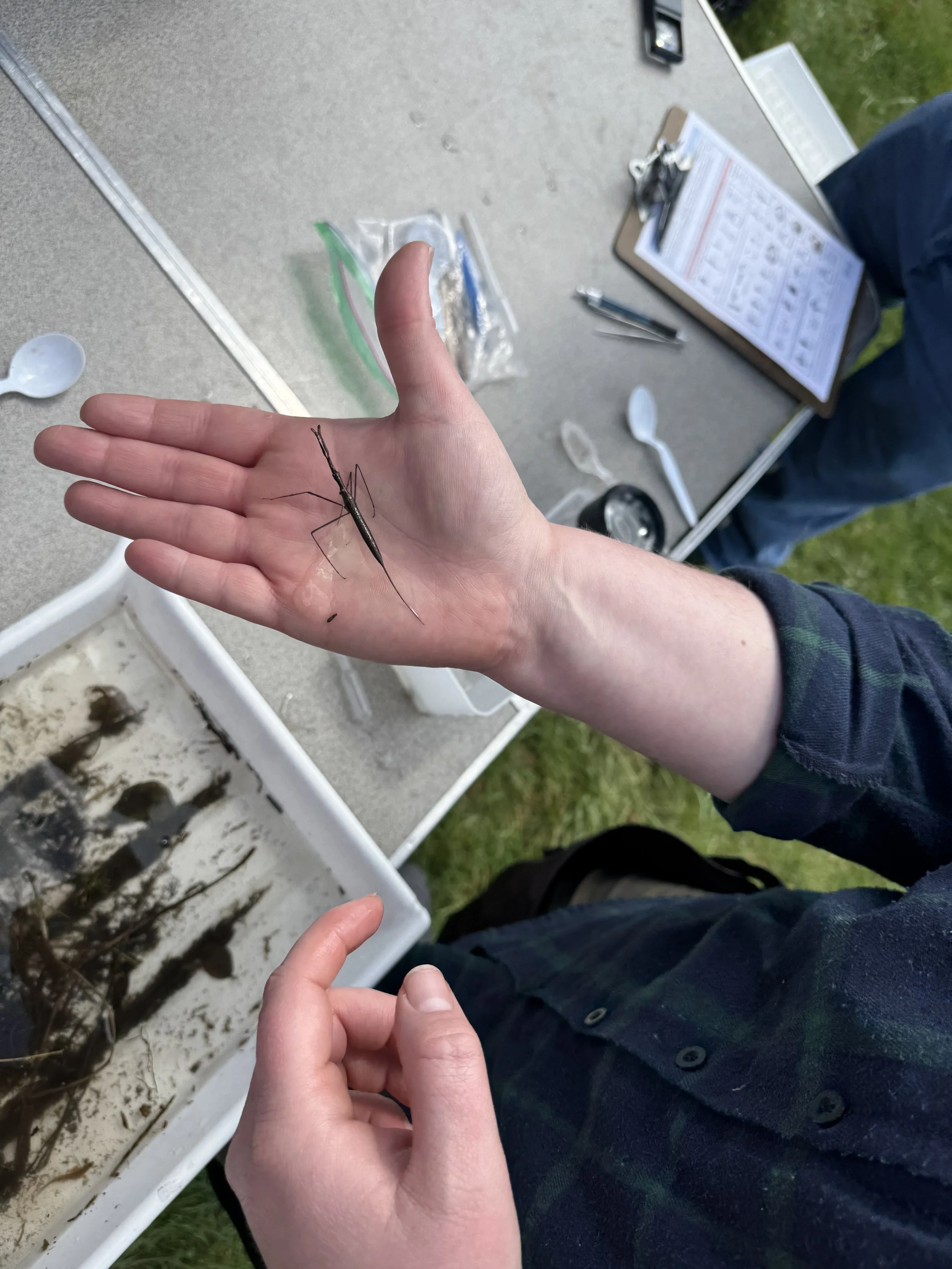
DESCRIPTION: Water scorpion (Ranatra sp.)
Watersheds around the world play a vital role in the economy. A HEALTHY watershed is able to provide ecosystem services such as clean water for agriculture and industry, supporting these sectors that employ billions around the globe, generating revenue through recreational and tourism opportunities, and even increasing property values. Watersheds' natural beauty and health play an important role in property values by providing protection from natural disasters such as historic rainfall causing flooding, and overall natural aesthetics. Read below to learn more about how the Lower Sugar River Watershed impacts our local economy.
Impacts on Our Economy

-
The economy of the Lower Sugar River Watershed has a strong agrarian base, with many dairy producers as well as farms that grow corn and soybeans. Our large dairy industry proudly supplies milk for area factories including Grande Cheese, located in Juda next to the North Fork Juda Branch of the Sugar River, Maple Leaf Cheese Co-op in Monroe with a retail outlet, Maple Leaf Cheese Store located in Juda, Raines Honey Farm near Davis, Illinois selling beehive products and Decatur Dairy with onsite store in Brodhead. A major manufacturing employer, Kuhn North America which manufactures farm equipment is located in Brodhead. Farming and manufacturing require a constant source of clean, healthy water from the Lower Sugar River Watershed. However, it’s important to remember that the health of the land also plays an important role in sustaining a vibrant economy, especially for the farm industry. Soil is one of the farming community’s most precious assets. One of the main goals of the LSRWA is to educate our fellow farm and industrial stakeholders about the benefits of using restoration and conservation best practices. These practices can help maintain a healthy balance in the watershed, protect our plant and wildlife community, and even provide economic benefits!
-
Historically towns and cities developed along rivers and that is where the economy thrived. Rivers provided the main source of transportation for people and goods and a source of power. The rich history of the Lower Sugar River Watershed can be found in area parks and museums. Take time to explore and learn about the original uses of the river. For instance, there was a pearl rush along the Sugar River that literally drew people into the river to search for perfect pearls in Sugar River mussels!
-
Clean water has been important for the local economy as long as people have lived along the shores of the Sugar River. We must work together as a watershed community so that future generations can enjoy all of the benefits that clean, healthy water provides.
Wastewater Management
Most of us don't really think about wastewater, but we should!
Wastewater affects our quality of life in a variety of different ways. The eruption of waste from a storm sewer during a heavy rain gets our attention. But the day to day regulation and management of wastewater is an important topic that directly affects the quality of our drinking water and the enjoyment of our water resources.
-
Think of wastewater as used water resulting from human activity that does not meet water quality standards.
-
This water with dissolved or suspended solids is released to surface or groundwater from locations known as point source dischargers. Point source wastewater comes from a known source. Some examples of point source dischargers are paper mills, mines, industrial locations, farms, particularly Concentrated Animal Feeding Operations (CAFOs), other commercial entities, and sewage treatment facilities.
-
The responsibility for management or regulation of point source discharges was delegated to the Wisconsin Department of Natural Resources by the United States Environmental Protection Agency (EPA) in 1974. Regulation is through the Wisconsin Pollutant Discharge Elimination System (WPDES) program which grants wastewater permits to discharging facilities. The five-year permits contain all the appropriate monitoring requirements, special reports, and compliance schedules. Permits in the Wisconsin portion of Lower Sugar River Watershed have been issued to various cheese companies and publicly owned wastewater treatment facilities in Albany, Brodhead, Juda, and Orfordville and to Pinnacle Dairy, LLC, a CAFO built to house 5,800 cows in Green County's Sylvester Township on Decatur-Sylvester Road.
Flood Control
Floods are part of living along and near a river. However, they can cause widespread damage and devastation. Anyone who has watched the power of a raging river understands the immense force that water can unleash on the landscape and anything in its way.
-
Luckily, there are some simple management steps we can take in our watershed to minimize the impacts of flooding on our personal and economic lives. Water naturally wants to wander as it moves down to the sea. Keeping and restoring natural meanders to the streams that feed the Sugar River helps to slow down water and spread it out over a greater area in flood-prone times.
Water that moves in a straight line, especially where it has been channelized, moves quickly and has more power to erode sediments into the streams. Unfortunately, many meandering streams were straightened for convenience before we realized just how detrimental this practice was to the health of the watershed and surrounding communities.
Flooding risks occur when snow melts before the frost is out of the ground, and also during periods of high rain when the water can’t soak into the ground. Native plants, like prairie grasses, have deep roots that anchor soil and hold water instead of letting it flow quickly downstream. Farmers can plant native plants where their fields meet streams, and homeowners can plant these native species instead of exclusively using lawn grass that allows water to sheet down to creeks and streams, often carrying fertilizer and other pollutants with it.
The good news is that taking these steps is easy, produces a natural and beautiful landscape, and helps prevent or mitigate the effects of rising water and flooding in the watershed.
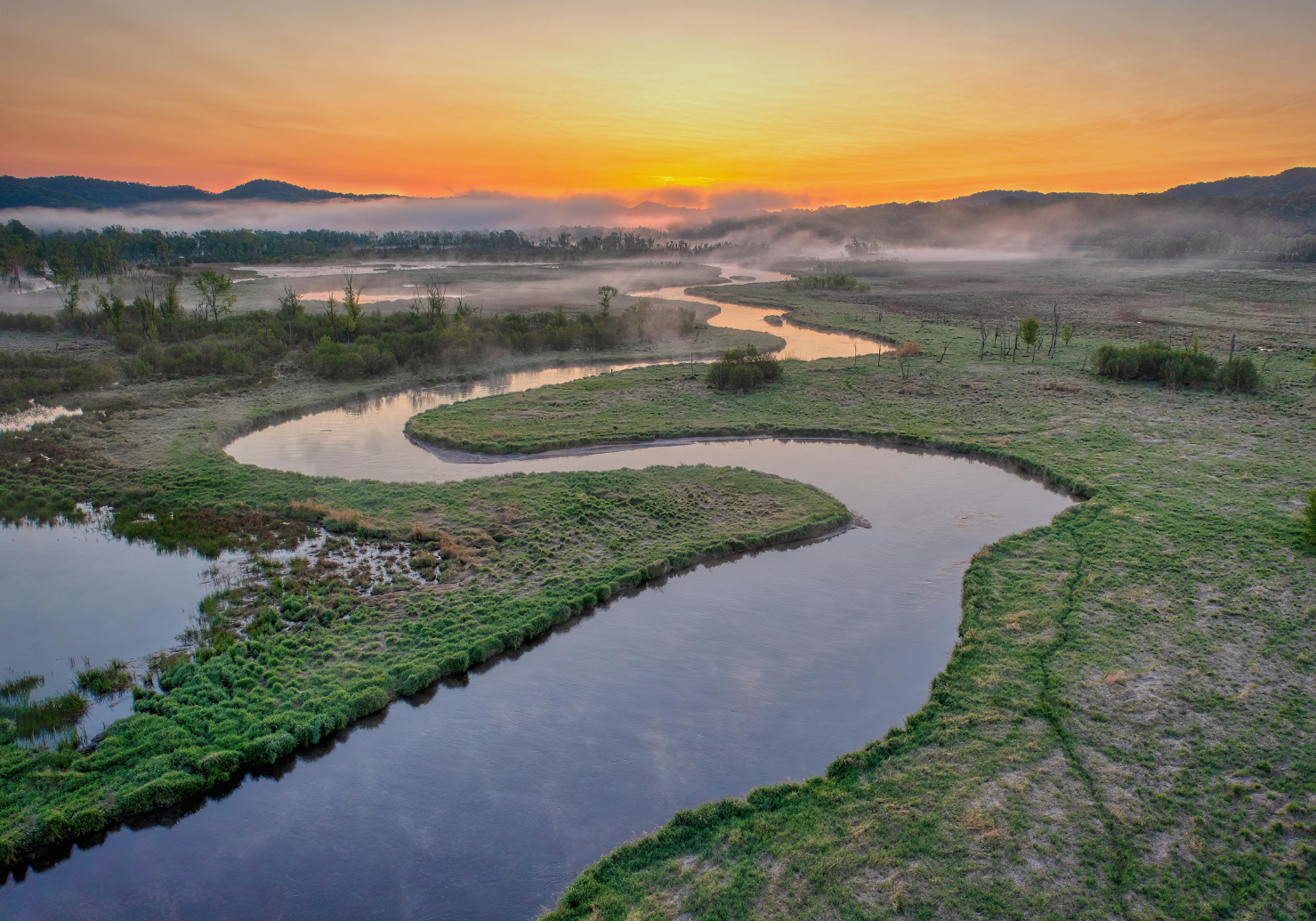
Getting in touch with the natural world is right for people of all ages and abilities. The Lower Sugar River Watershed provides many opportunities to enjoy life on and around the water. Increasing time outdoors in nature has been shown to be helpful to both physical and mental health. Some activities, like canoeing, kayaking, and fishing, come to mind easily, but the watershed offers many other ways to relax and unwind. Check out the list below for some inspiration on how to get outside and connect with our wonderful watershed.
Float quietly on the Sugar River and see how many turtles you can pass without them plopping into the water!
Check out our wonderful local city and county parks in Albany, Brodhead, Orfordville, and Durand.
Grab your binoculars and go birding in the woods, wetlands, and prairies of our watershed. Try it at night too, as owls are common, especially near the Sugar River.
Getting in Touch with Nature
Bring paper outside and journal, draw or paint.
Scoop macroinvertebrates out of the water to observe and release.
Drop a line in the water for a day of fishing.
Enjoy the fall color and start a leaf collection.
Watch spring return as the wildflowers bloom before the tree leaves fill in.
Bring a picnic and enjoy the day.
Set up a telescope in an area of the watershed with dark sky.
Walk your dog - but be sure to pick up after.
Impress your friends with your photography of the watershed.
Attend an outdoor concert on a summer evening.
Cross country ski or snowshoe on a winter’s day.
Visit a dairy and indulge in a treat.
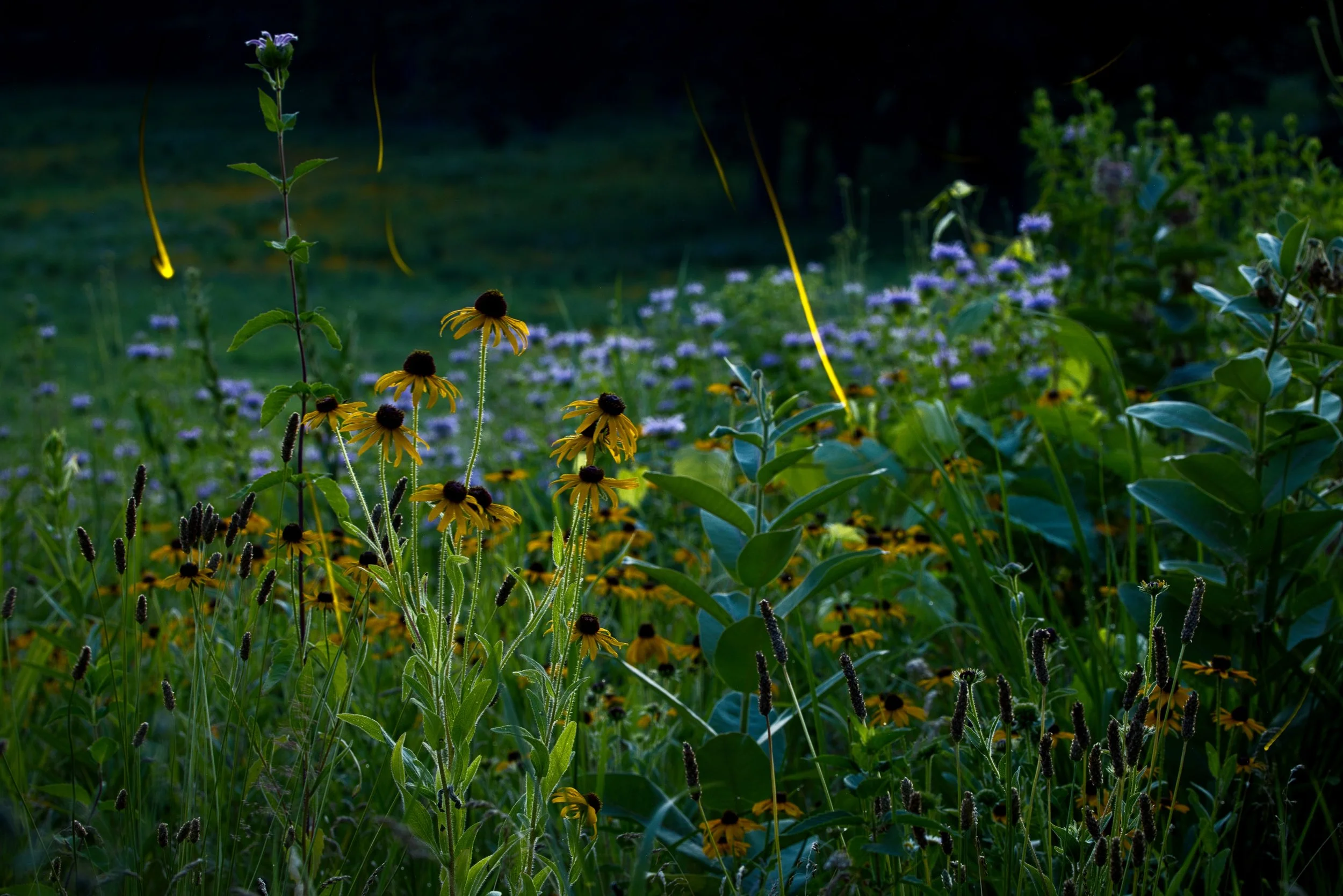
Wildlife photography, native plants, and immersing oneself in natural all captured in one photo by Craig Ellefson. The fireflies are dancing amongst the native plants within our watershed.
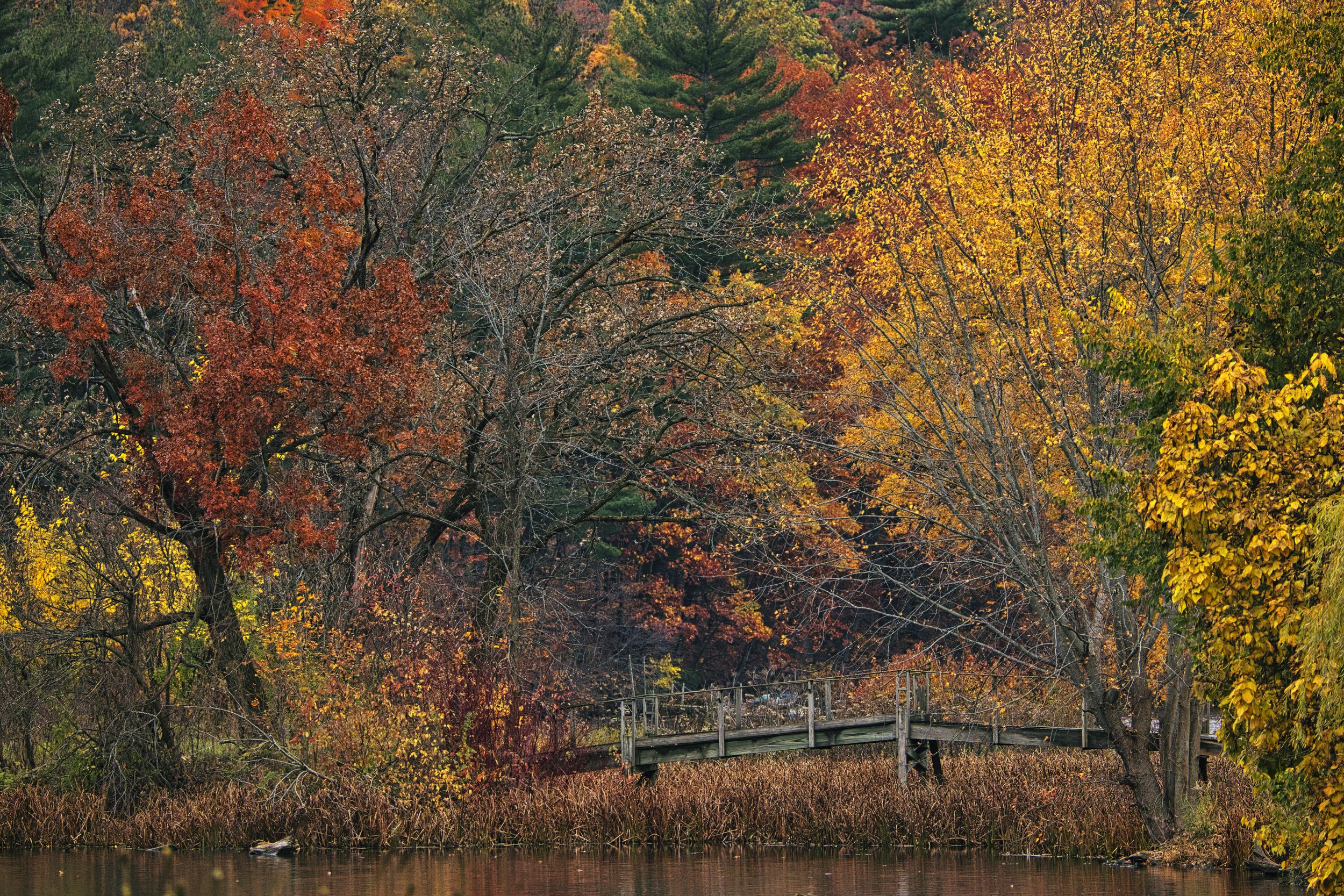
Capture the Moment
Mother Nature’s art is all around you with the intersection of water and land in the watershed.
Whether you’re out hiking or just driving through the countryside, pack your camera to capture year-round images of plants, animals, and the ever-changing landscape of the river and her tributaries.
Painting and drawing the landscape are other ways to preserve its beauty and help others to see the true natural wonders of our watershed.
Writing down your notes and thoughts in a journal is a great way to help you remember your time exploring the land around the Sugar River.
Oh the Places You Can Go!
The Lower Sugar River has a number of dedicated natural areas that are open to the public. Many of them have rare or endangered species, unique ecosystems, and offer a wonderful way to get to know your watershed in an interactive and personal way. Please take the time to explore each and every one of these important natural resource areas. Tag us in your adventures on social media!
Ward/Swartz Decatur Woods State Natural Area
Pearl Island Recreational Corridor